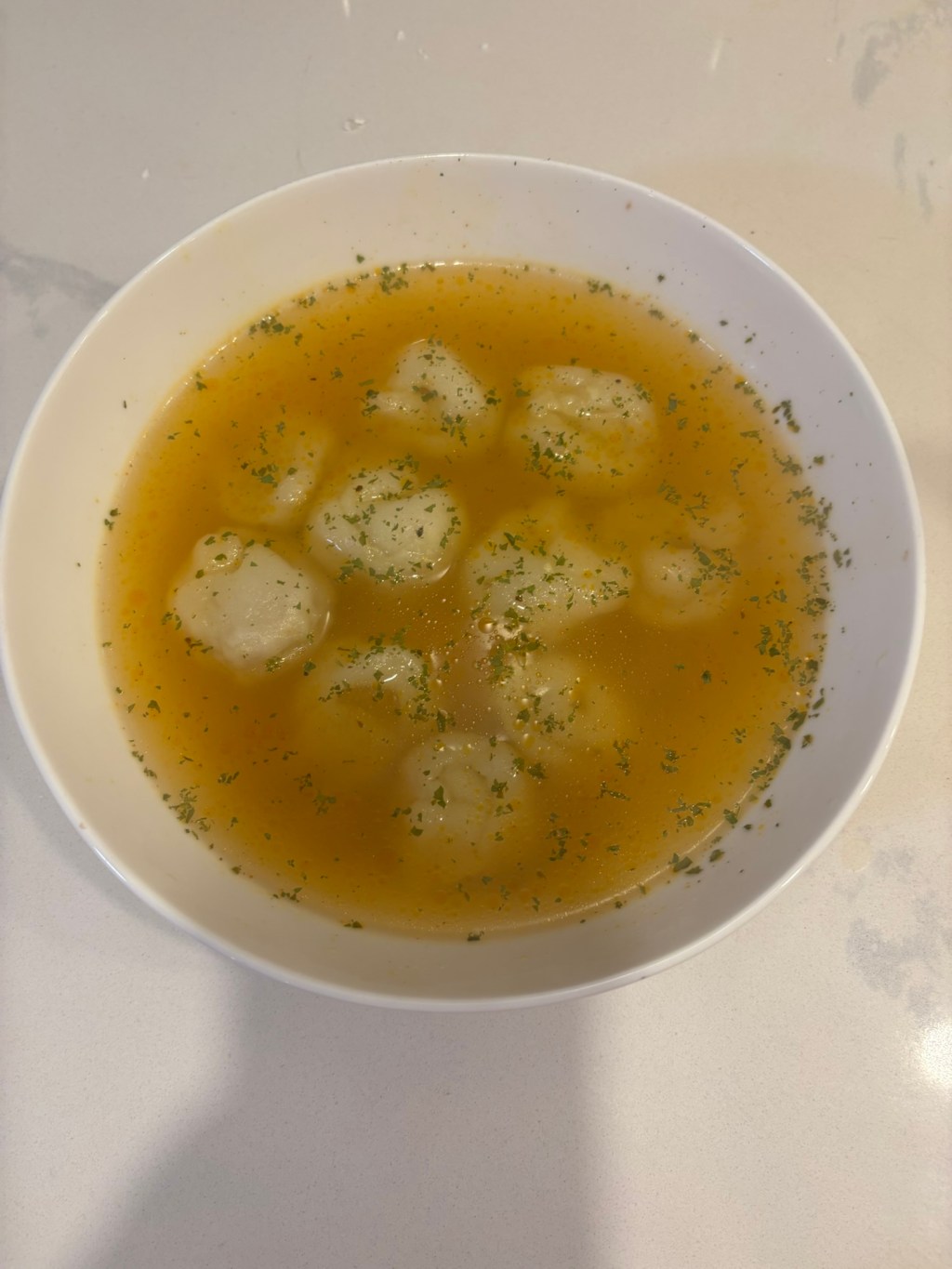
(Egg-Free, Dairy-Free, Freezer-Friendly)
I wasn’t trying to “create a recipe” when I made these.
I just wanted pelmeni.
Real pelmeni — the kind that feel soft and comforting, not gummy, not weird, not like gluten-free dough pretending to be something else. If you’ve ever tried gluten-free dumplings, you probably know how disappointing they can be.
So I went into this slowly, step by step, trusting the texture, watching the timing, and adjusting only when something truly mattered.
And to my surprise…
they worked.
Not just worked — they tasted like real pelmeni.
This is the exact method and recipe I used in my kitchen, including the dough texture, resting time, freezing instructions, and cooking cues that made all the difference.
No eggs.
No dairy.
No yeast.
And yes — freezer-friendly.
⸻
The Dough (This Is the Key)
The secret to this dough is hot water + tapioca starch, which gives flexibility and chew without gumminess.
Ingredients
• 1 cup white rice flour
• ½ cup tapioca starch (do not increase)
• ½ teaspoon fine salt
• ¾ cup very hot water (not boiling)
• 1 teaspoon olive oil (helps flexibility)
Method
1. In a bowl, mix the rice flour, tapioca starch, and salt.
2. Pour in the hot water and stir quickly.
3. Add the olive oil and knead for 2–3 minutes until smooth.
Texture note:
The dough will feel Play-Doh-like at this stage. This is correct for gluten-free dough and does not mean it will taste that way once cooked.
4. Wrap the dough tightly and let it rest at room temperature for 15 minutes.
⸻
The Filling (Simple, Juicy, Traditional)
Pelmeni filling is meant to be simple. Over-seasoning ruins the classic flavor.
Ingredients
• 1 lb ground chicken
• ½ small onion, very finely chopped or pulsed
• 1 teaspoon salt
• ½ teaspoon black pepper
• 2–3 tablespoons cold water
Method
1. Combine all ingredients in a bowl.
2. Mix gently until just combined and slightly loose.
The added water is important — it keeps the filling juicy and creates steam inside the dumpling as it cooks.
⸻
Assembly
1. Divide the dough in half and keep one half wrapped while working.
2. Roll the dough between parchment paper to 1–2 mm thickness.
3. Cut circles about 2–2½ inches wide.
4. Place ½ teaspoon filling in the center of each circle.
5. Fold and pinch firmly to seal. You can bring the ends together if you like the traditional shape.
These do not need to be perfect. Rustic pelmeni are authentic pelmeni.
⸻
Cooking (Fresh)
1. Bring a large pot of water to a rolling boil.
2. Add 1–1½ tablespoons salt.
3. Drop pelmeni in gently and stir once.
4. When they float or bob, cook 2 more minutes.
5. Remove immediately with a slotted spoon.
Overcooking gluten-free dough is what causes gumminess — timing matters.
⸻
Freezing & Cooking From Frozen
These freeze beautifully and are perfect to keep on hand.
To Freeze
1. Place raw pelmeni on a parchment-lined tray or plate.
2. Freeze until solid.
3. Transfer to a freezer bag or container.
They keep well for 2–3 months.
To Cook From Frozen
1. Bring salted water to a boil.
2. Add frozen pelmeni directly (do not thaw).
3. Stir once.
4. When they float, cook 3 more minutes.
5. Remove immediately.
⸻
How I Serve Them
I usually keep it simple:
• A little olive oil or vegan butter
• Salt and black pepper
• Sometimes straight into soup
They’re soft, comforting, and surprisingly close to traditional pelmeni — something I honestly didn’t expect from a gluten-free dough.
This recipe came from real cooking — paying attention to texture, trusting the process, and not fighting the dough.
If you’re gluten-free and miss comfort food like this, I really hope these find a place in your freezer.
If you want to follow along, I share more real-life cooking, freezer meals, and gluten-free comfort food on Instagram at @heartandsoulcooks.
Happy cooking 🤍
And yes — these are worth making.
 InMyBlog
Leave a comment